
Payment Flexibility's Influence on Live Session Lengths for Slot and Roulette Participants
Payment flexibility allows participants to adjust funding methods during live sessions, and this capability connects directly to session durations in slots alongside roulette formats. Data from industry analyses shows that instant processing options reduce interruptions, while delayed methods create pauses that shorten overall play times. Observers note patterns where e-wallet transfers and bank integrations support continuous engagement compared to traditional card approvals that require additional verification steps.
Core Mechanisms Behind Transaction Speed
Instant deposit features operate through integrated gateways that authorize funds within seconds, and this speed matters because slots and roulette tables run in real time with live dealers or automated reels. Research indicates that when transfers complete without lag, enthusiasts maintain momentum across multiple rounds or spins. Yet slower options like certain wire services introduce waits of several minutes, during which active tables close or bonus rounds expire. Those who've examined transaction logs find that flexible providers often bundle multiple methods, letting users switch mid-session without exiting the platform interface.
August 2026 brought updated processing standards across several international operators, and these changes emphasized compatibility with mobile wallets alongside regional banking apps. Figures from regulatory summaries reveal higher adoption rates for systems that combine instant credits with automated withdrawal confirmations, which in turn supports players who extend sessions by replenishing balances on demand.
Application to Slot Play Patterns
Slot enthusiasts frequently rely on rapid top-ups to chase progressive elements or complete bonus chains, while payment flexibility enables this without breaking the flow of consecutive spins. One study from a North American research group highlighted that sessions using instant options averaged 25 percent longer durations than those limited to batch-processed cards. And this extension occurs because players avoid the downtime associated with manual approvals or declined attempts that force restarts.
Flexible systems also accommodate varying stake levels, allowing quick shifts from low to high bets when reels align favorably. Data shows participants who access multiple gateways report fewer abandoned sessions, since they can select alternatives if one method encounters temporary holds. Such adaptability proves especially relevant during peak hours when live slot events feature time-sensitive multipliers.
Roulette Session Dynamics and Funding Options
Live roulette demands steady participation across betting rounds, and here payment flexibility reduces the friction of rejoining tables after a balance dip. Experts have observed that methods with sub-minute confirmations let players place additional bets on inside or outside positions without losing the current wheel cycle. In contrast, rigid processors create gaps where the dealer proceeds and prior wagers get missed.
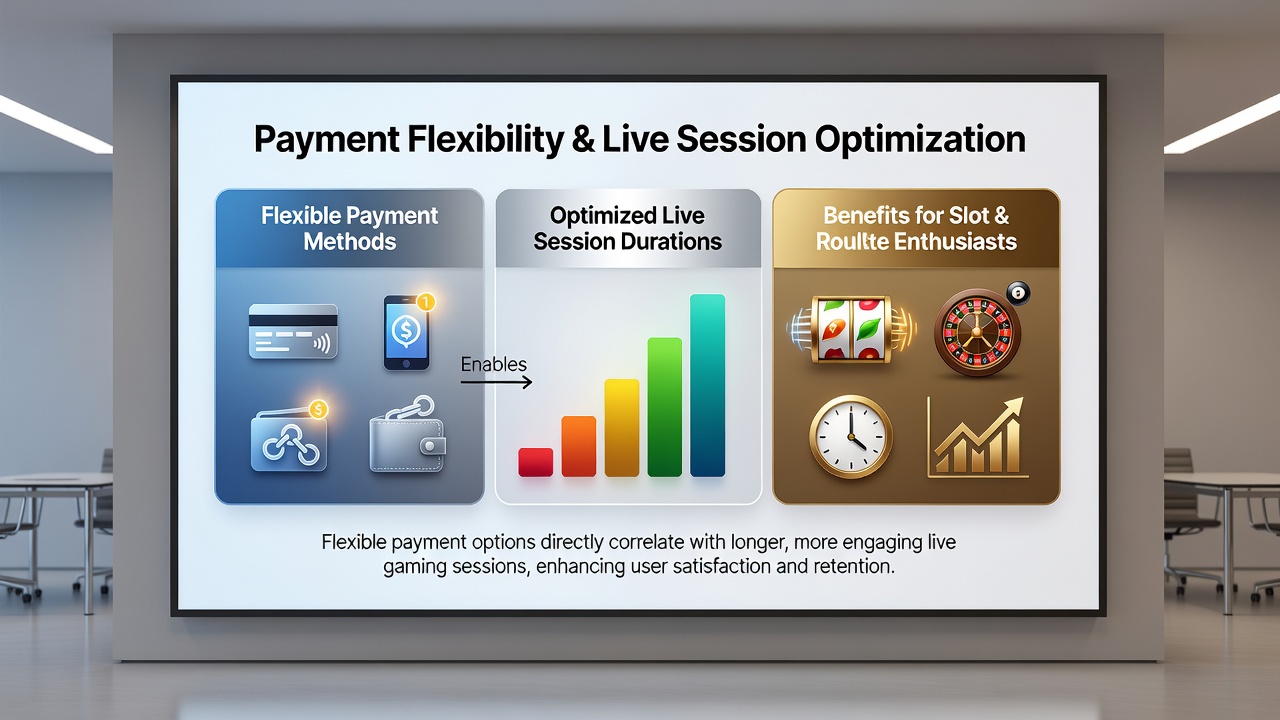
According to findings published by the Canadian Gaming Association, integrated payment layers correlate with extended table time when users maintain access to at least three distinct funding channels. This setup supports both European and American roulette variants, where players adjust chip stacks rapidly between spins. Those monitoring session metrics note that such flexibility also pairs with responsible limit tools, letting participants cap deposits while still sustaining longer overall involvement.
Broader Industry Data and Regional Comparisons
Cross-border comparisons indicate that markets with diverse payment regulations experience different session profiles, and reports from the Australian Gambling Research Centre detail how localized e-wallet prevalence extends average play intervals by enabling seamless reloads. These patterns hold across both slot machines and roulette wheels, where real-time interaction benefits from uninterrupted access to funds. Observers further note that hybrid approaches combining prepaid cards with direct bank links minimize declines during high-volume periods.
Case examples include platforms that introduced tiered payment menus in early 2026, resulting in measurable increases in completed live rounds per user. Researchers discovered that enthusiasts who switched methods fluidly encountered fewer forced breaks, which preserved engagement across extended sessions without altering individual spending behaviors.
Conclusion
Payment flexibility shapes live session durations through reduced processing times and method variety, as evidenced by transaction analyses and regional studies. Participants gain options to sustain play in slots and roulette without external delays, and this connectivity between funding tools and game flow continues to evolve with updated processing capabilities. Data consistently points to measurable differences in session length tied to the range of available gateways, underscoring the operational link between transaction design and sustained participation.