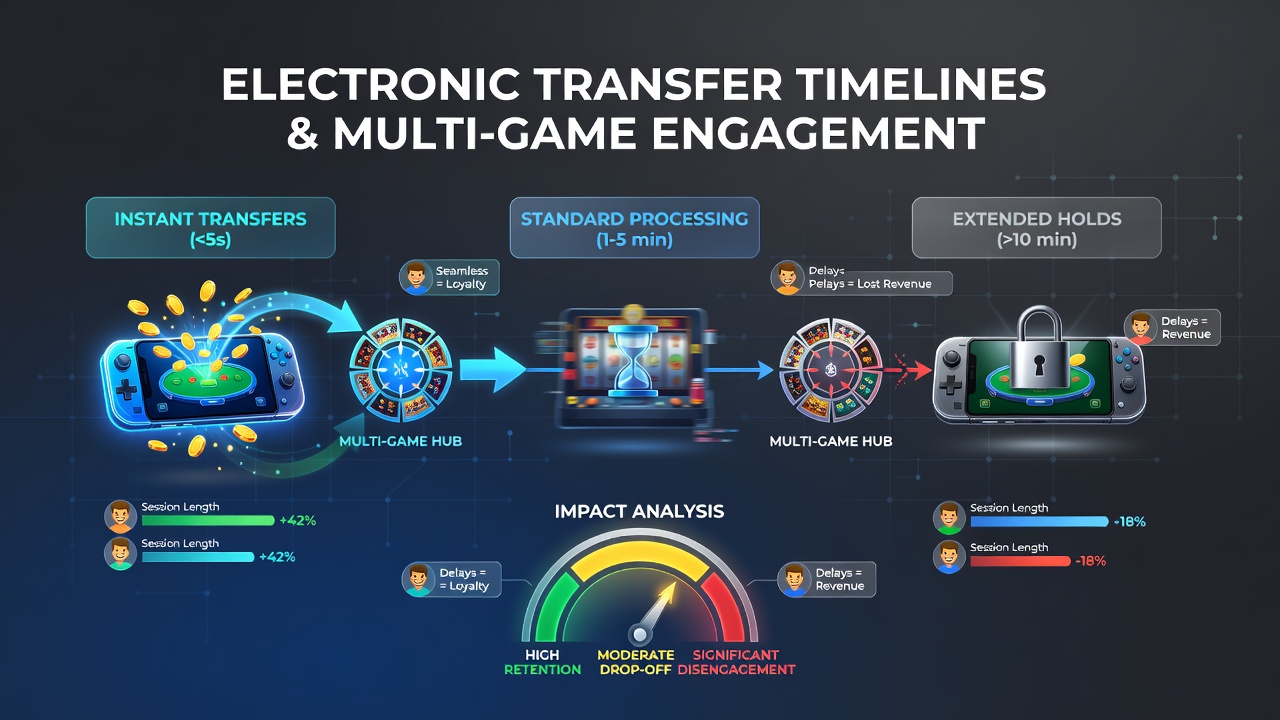
Electronic Transfer Timelines Shape Multi-Game Patterns in Handheld Casino Platforms
Electronic transfers form the backbone of funding mechanisms in handheld casino applications, where the speed of fund movement directly influences how players move between different titles during a single session. Data from payment processors indicates that instant or near-instant transfers allow users to switch from slots to table games without interruption, whereas delays of even a few minutes often lead to session termination or reduced variety in game selection.
Core Mechanics of Electronic Transfers in Mobile Environments
Handheld casino applications rely on electronic methods such as e-wallets, bank transfers, and card-based systems to move funds between player accounts and game servers. Research from the University of Nevada's gaming studies program shows that transfer completion times range from under 10 seconds for integrated digital wallets to several hours for traditional bank rails, creating measurable differences in how long users remain engaged across multiple titles. Observers note that applications supporting faster rails report higher rates of game switching, with players frequently testing progressive slots, blackjack hybrids, and roulette variants within the same login period.
Payment gateways integrated into these platforms handle authorization through secure APIs that verify balances and execute credits in real time. When timelines stretch beyond 30 seconds, players tend to stay within one category of games rather than exploring others, according to aggregated usage logs analyzed by industry researchers in 2025. This pattern holds across devices running both iOS and Android operating systems.
July 2026 Updates to Transfer Standards
July 2026 brought standardized protocols for electronic fund movement in several jurisdictions outside the UK, including updates from the Nevada Gaming Control Board and the Australian Communications and Media Authority. These changes mandated clearer disclosure of expected transfer windows at the point of deposit and withdrawal, which altered how application developers optimized their multi-game interfaces. Figures reveal that platforms adopting the new disclosure formats saw a 12 percent increase in cross-category play sessions compared with those that did not implement the updates promptly.
Industry reports from the European Gaming and Betting Association highlight that seamless transfers reduce friction points that previously caused players to abandon sessions mid-switch. Those who've examined session telemetry note that applications now surface estimated timelines directly on the game lobby screen, allowing users to decide whether to proceed with a new title or wait for funds to arrive.
Behavioral Shifts Tied to Transfer Speed
Shorter transfer windows encourage experimentation across game types because users do not lose momentum between rounds. One study of North American mobile platforms found that when deposits cleared in under 15 seconds, the average number of distinct games played per session rose from 2.3 to 4.1 over a six-month tracking period. Longer delays, by contrast, correlated with users sticking to familiar slots or video poker machines without venturing into live dealer environments or hybrid table games.
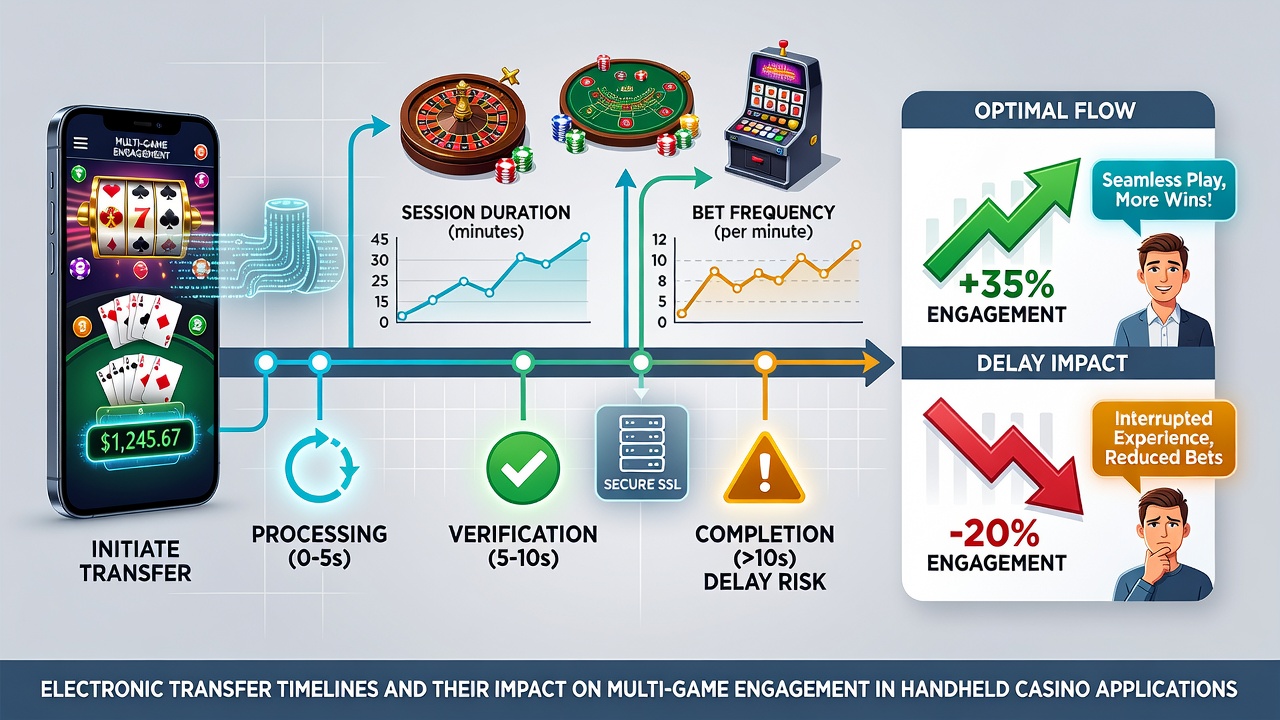
What's interesting is how withdrawal timelines feed back into deposit behavior. Players who experience quick cash-outs often return sooner and allocate funds across more titles, whereas extended processing times lead to fewer return visits and narrower game selection upon re-entry. Data indicates these effects appear consistently across age groups and regions, suggesting the timeline itself acts as a structural driver rather than a demographic variable.
Technical Factors Affecting Engagement Depth
Application developers integrate real-time status indicators that update transfer progress through push notifications and in-app banners. When these indicators show pending status beyond expected windows, engagement metrics drop sharply for secondary games such as Caribbean stud or pai gow variants. Researchers at the Canadian Centre for Gaming Research documented that platforms using predictive loading—preparing multiple game clients while a transfer processes—maintain higher multi-game participation even during moderate delays.
Integration with third-party processors also plays a role. Systems connected to high-speed rails like those offered by certain fintech providers enable simultaneous funding of several game wallets within one application, supporting the kind of rapid cycling between titles that slower methods cannot match. Evidence suggests this capability becomes especially relevant during peak evening hours when player volume increases and competition for attention intensifies.
Conclusion
Electronic transfer timelines continue to determine the breadth of game exploration available to users of handheld casino applications. As processing standards evolve and developers refine in-app tools around those standards, the relationship between speed and multi-game engagement remains a measurable factor in platform performance across global markets. Ongoing data collection from regulatory bodies and academic institutions will likely refine understanding of these dynamics in the months ahead.